

Where Do We Find Ourselves?
On the Wonder of Being Within the World

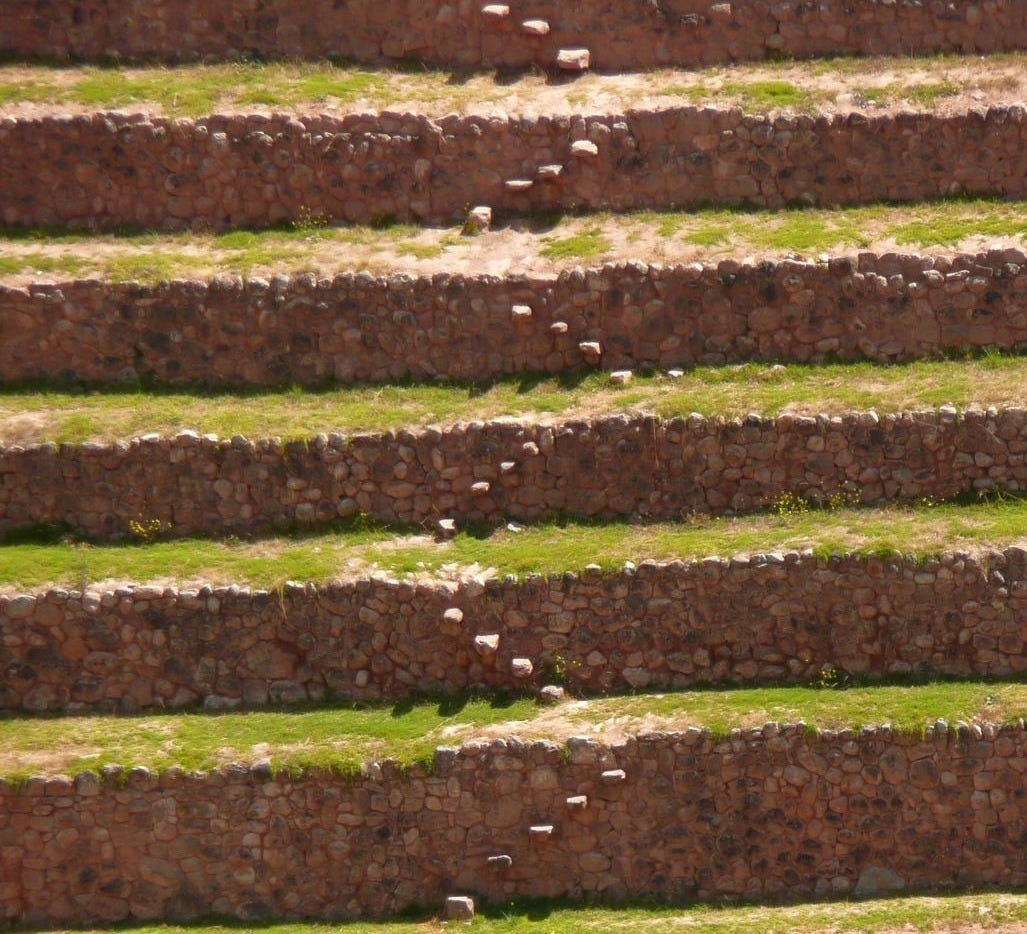
“Where do we find ourselves? In a series of which we do not know the extremes... We wake and find ourselves on a stair; there are stairs below us, which we seem to have ascended; there are stairs above us, many a one, which go upward and out of sight.”
— Ralph Waldo Emerson, Experience
Philosophy—literally, the love of wisdom—is actually the art of asking questions.
Usually, we begin with the heavy ones: Why are we here? What is the truth? How should we act? We treat these as the framing for our lives. But underneath and prior to all these stands a question not of reasons, motivations, or norms, but of place:
Where do we find ourselves?
This is not a call for an introspective dive into the deeps of an isolated mind. It is a call to open our senses; it beckons us to reach outside, to look about us.
An honest initial reply can be summed up in one expression: in medias res. We are always already in the thick of things—not at the alpha, nor anywhere near the omega, but squarely, unavoidably, in the middle. Betwixt and between, amidst the muddle and wonder of the world.
The Myth of the Beginning
Oh, how much we would have liked for it to be otherwise. We want to be able to choose our beginnings, to decide where to start, at which place and at what time. Have you ever wanted to be born into a different family, or a different society? To live at a different time or in another place?
The unavoidable reality is that such choice is not given us. We wake, as Emerson points out, halfway along a staircase—not sure where the stairs begin, and unable to see where they end. We wake in wonder, not only about where we are, but to the very strange fact of our awaking itself. In this, too, we are not given a choice. We are thrown into the world, and only gradually, and retrospectively, do we become aware of the strangeness of this fact.
Starting Where We Are

The Daodejing (often known as Tao Te Ching) states :
“A journey of a thousand miles begins beneath one’s foot.” (64)
This is not merely a remark about size and proportion, that is, a reminder that every great journey begins by taking a first, small step (as this sentence is sometimes paraphrased). Rather, it is an assertion that any action, any movement, any journey, cannot begin except from where we stand at this moment.
The beginning of every journey is always, already, someplace. We are not the authors of our contexts, but their inheritors. We are finders, not makers.
We are born into history’s tangle, into the play of language, custom, and culture, bound by the invisible threads of relations that precede us. We wake, already halfway along the staircase, confused as to how we got here, and unable to see where it ends.
While we often focus our attention on the destination, the goal somewhere in the future, destination and the origin are inseparable parts of any journey. We must first understand where it is we start from.
Understanding Where We Stand
The word understanding itself implies this. Etymology, ever a wise tutor, tells us that understand comes from Old English roots meaning “to stand in the midst, among, or between.” Not above, not outside, not lording over from a distance, but intimately situated. To under-stand is to be placed, to find yourself not atop some neutral viewing platform, but amongst things—entangled in relations, woven into the threads of this world.
This betweenness is not a failing or a flaw; it is the primal scene of reality itself. Whether it is the sliver between two heartbeats or the space between heaven and earth—we are always in-between. We are inextricably, fundamentally interrelated; connected to each other, to our surroundings, and to our physical, social, and cultural environment.
The Invitation to Harken
To ask “Where do we find ourselves?” is to realize the fact of our interrelatedness. It calls for a more honest accounting of our limitations, and a recognition of our debts. It requires acceptance of our responsibilities.
Hence, the first philosophical act is not one of prowess or invention, but of attention—“to attend,” which itself means to stretch or extend oneself toward something.
This is a significant departure from the Western fantasy of mastery, the myth of the self-made person or unconditioned individual.
First and foremost, it requires that we stop and listen. It invites us to harken to the voice of the world in which we are found.
Here, amidst the turbulence, is where wonder may crack open. Ever in the middle, within; planted in a soil we did not choose, our leaves blown by winds we did not summon.
Here, we begin.